Friday, 25 September 2026

Roots and Shoots

Roots and Shoots


This is the story behind me finding my lost maternal relatives, and my entry into the fields of family history and genealogy. Unusually for me, I have omitted formal citations, partly to keep the narrative flavour and partly because most of the connections were made through direct communication. Ironically, it is much easier to find deceased ancestors than it is to find living relatives.

As a child growing up in Nottingham (England), I had one set of grandparents — my father's parents — and I accepted this as normal. Later on, my mother explained that she had been adopted, but I was too young to understand. When old enough, she explained that she had five brothers and sisters somewhere that she had not seen in nearly 60 years. They were all taken away from the Nottingham family home in a black cab in 1947, leaving their mother behind.

I could tell that she was curious about what happened to them, but also apprehensive about meeting them because she might not like what she found. She never kept in touch with her biological or adoptive parents, but I promised her that one day I would find out. In preparation, she wrote down their names and approximate ages at the time of their removal:

·         Irene, 9

·         Brenda, 8

·         Albert, 6

·         Margaret, 4

·         Christopher, 3

·         Dennis, 18 months

My mother was originally Irene Rowland, and her name was later changed through adoption to Ann. She still had her certificate of adoption, dated 11 August 1953, but this only gave the name of her adoptive mother, Lucy, as her adoptive father (Robert) had died just the year before. Her biological parents were Benjamin and Sarah Rowland.

When enough time became available, in about 2004, I first approached a professional with a view to unlocking the mystery of why they were taken away and where they went, but I was told that it was not possible. If any records survived, they would be locked. I thought 'I'm not accepting this. I can do research. I will do it myself', and so I entered the world of family history.

I first searched for their birth references in the quarterly GRO index. At that time, the records had not been computerised, and so I had to look through endless scans to locate them. I then ordered copies of their birth certificates so that I could tell which children were adopted and which weren't — adoptees have "Adopted" retrospectively written in the right margin of their birth certificates before they are exchanged for the adoption certificates — and found that my mother was the only one formally adopted.

Benjamin remarried in 1953, and died in 1982, while Sarah died in 1999. Hence, I was not going to meet them or get information from them. From the death certificate of Sarah, I found that the informant was yet another daughter, Susan Rowland, who it seemed was born in 1951 (i.e. after the other children were taken away). It also gave an address for her. A quick check in the electoral register showed that she was still there, and with her daughter, Kym. I wrote to Susan to explain what I'd found out so far and ask her if she could help. Susan was a great help, despite her mother not speaking much of the other children. By virtue of me being the eldest son of her eldest sister, I was only a few years younger than Susan.

Susan confirmed that her parents, Ben and Sarah, were divorced in 1952, and openly suggested that she might be a half-sister. She had been in touch with Christopher and told me that he died in 2000. A check in the records showed that this was May 2000 in Colchester area; sadly not far from where I was working at the time.

Susan also told me about Brenda living in Scotland, and provided me with part of the address. I filled in the missing bits and saw from the electoral register that she was still there, with children Carol and Stephen, but with no phone number. I wrote a long letter but nothing came back. After a few weeks I wasn't sure whether she had moved and so I send a bunch of flowers in the hope that Interflora would tell me if they couldn't deliver them for some reason. That worked! I got a phone call a couple of days later. We had a long chat, but her health was not great so I promised that I would visit one day.

Scotland made sense because my mother insisted that she got a letter from Brenda, not long after I was born, saying that she had been in the army and married a Scotsman. We were moving house at the time and this letter got lost in the move. My father never actually saw it, and always doubted its existence because how could she have found that rented address. However, this vindicated my mother.

On GenesReunited, I found a tree containing a Margaret Rowland that was owned by a Margaret with a different surname. I suspected that this was her married name, and managed to contact her through the old FriendsReunited website.

Margaret said she stayed with "Peter" (her name for Dennis) when she was very young. She believed he was fostered by the caretaker family of the Glaisdale School, whose surname I found was Knibbs. On the assumption that his name had probably been completely changed to Peter Knibbs, I did a search and found a Peter Knibbs actually went to that school, and his age looked right. However the GRO index showed there was no Peter Knibbs born anywhere in the country during 1946, suggesting that his birth name was something different. I then found someone had the same Peter Knibbs in their family tree on GenesReunited. I contacted the owner (Tina) and got this reply: "Yes, you are quite right, my Uncle Peter was originally Dennis Rowland and he had a sister called Margaret. He was adopted by my Grandparents and I grew up with him until he married and left home". She gave me his phone number and suggested that I speak to him directly.

This is where I get a bit choked. On the phone, I started by asking if the surname Rowland meant anything to him. He started to get a bit emotional and sat himself down. He had been hoping to get a call like this. He knew he had a family somewhere, but only met Margaret. He suggested that we meet and gave me his address, which completely bowled me over. He was living a mere 10-minute walk from my mother, and they had both been there for about 40 years, but as both of their names had been changed then they would never have known. They hadn't met for 60 years and he was just down the road.

In 1982, Christopher made a hero's appearance in the local paper. On his way home from his job as a car mechanic, he gave chase for nearly a mile — over fences and through gardens — before he caught two burglars and detained them until the police arrived. He received the Nottinghamshire Constabulary/Evening Post Citizen of the Month Award, but shrugged off the incident as being his “duty as a member of the public”. I contacted both the Nottinghamshire Constabulary and the Evening Post to see if they retained copies of photographs appearing in the paper, or of his award, but neither did.

Susan thought Christopher had a much older girlfriend in Nottingham, and the records confirmed that he actually married a lady (Kathy) 20 years his senior, in 1993. Brenda gave me the phone number of a later girlfriend from Clacton-on-sea, Joyce. When Kathy died in 1997, Christopher apparently moved south to Clacton. I contacted Joyce and found out a lot about his last days. She also sent me some of his photographs and we arranged to meet to view his grave. She not only had copies of his army service record, but his old army uniform, the actual award he received, and tiny contact prints (about 1cm x 1cm) of him. Scanning the contact prints on a very high resolution and inverting the black-and-white allowed me to reprint the photographs I had been trying so hard to find.

Christopher (centre), receiving award in 1982.


This was very emotional for me because it felt like I was bringing Christopher back to life.

Margaret recalled meeting Albert at the Nottingham Goose Fair when she was a teenager, and thinks he was around Bradford at the time. A later conversation with George Rowland (my mother's last remaining uncle) confirmed he was once living around Bradford. Out of desperation, I wrote a letter to every Albert Rowland in the electoral register who had no middle initial, but got no bites. I then ordered a copy of every marriage certificate for an Albert Rowland between about 1960 and that present time. Luckily there were only eight, and out of those two were his (1963 in Bradford, and 1974 in Lincoln), which was a very nice result. Given this, I started to look for the birth records of his children, and possibly grandchildren, in the hope of locating one of them on social media. I then found a different source for the electoral register and identified some entries that were not in the source I had used previously. One of these (in Lincoln) had a match for his second wife's name at the same address, but with no phone number. I therefore wrote a letter — I was now getting good at cold calling and writing letters — and arranged to meet them both.

My mother's adoptive mother (Lucy) died in 1971, and I was told they had a falling out because she did not like my father when they were dating, commenting that he was "deep". However, I managed to contact her son, Kenneth, who at that time was in a care home. He was thrilled to hear how things had worked out, and provided some previously unseen pictures of my mother as a child.

Irene/Ann and Lucy, about 1950.


In the May of 2008, my mother was coming up to her 70th birthday and so I decided that all the brothers and sisters should meet up. I arranged a get-together up in Scotland, not far from her sister, Brenda, and everyone made the effort to come. In the bar that evening, it was like they had never been separated — wonderful to watch. In a little speech, over dinner, I started to say that they had not all been in the same room for 60 years, and then realised that when including Susan they had never been in the same room together. The event was a great success, and was repeated the following year, a little after Brenda's 70th birthday.

Dennis/Peter, Irene/Ann, Margaret, me, Susan, Brenda, Albert, 2008.


As for the reason why the Rowland children were removed, this took a while longer to resolve. After multiple tries, I finally managed to contact the right department of the Nottingham Council, but they just confirmed that records were only kept for 25 years. A chance find in the newspaper changed things. It was about her mother in 1947, but the surname was misreported as Rowlands, with an extra 's'. I knew from another newspaper article  that she had been fined £15 in 1946 for the illegal possession of two ration books (remember, food had been rationed since the War), but the latest article showed that she was prosecuted for child neglect by the NSPCC, and served two months in prison.

I had already got my new aunts and uncles to sign letters of authority granting me access to whatever I might find. The court records revealed more detail, such as she having defaulted on some of the initial fine, and the Council deciding to perform a house inspection because of her circumstances. Her husband (Ben) was in Lincoln prison between the May and August of that year for other offences, and she had to work in a bar at night, sometimes leaving my nine-year-old mother in charge at home. Times were tough back then, and it is unlikely that the same steps would have been taken in more recent times.

● ● ●

Following this research, and meeting many of my lost relatives, several have sadly passed away: Christopher, 2000; Sheila (Peter's wife), 2011; Kenneth (my mother's adoptive brother), 2011; Brenda, 2012; Peter (aka Dennis), 2015; Steven (Margaret's son), 2016; Carol (Brenda's daughter), 2016; Albert, 2017; George (my mother's uncle), 2025; RIP.

Looking back, I am so proud to have found them all, reunited them, and given them all closure while there was still time.

Thursday, 7 April 2022

What a Mess

This will be my last blog post for the foreseeable future, and probably forever. This is not a matter of free time, or of advancing years, or even of competing tasks, but of a complete disillusionment with modern genealogy.

I will continue to research in my spare time, but this will be to produce something of standing for my family and extended family to read; I have lost faith in the public world of genealogy. But let me explain in more detail because this has been on the horizon for a while, and yet previously planned retreats have all fallen down for different reasons.

I am use to academic research, and how academic research works in other fields. The purpose of research in those other fields is to find answers — truths — and to produce a valuable collective body of work through collaboration. Virtually by definition, it is not a commercial goal.

I have previously pondered over the nature of genealogy (What is Genealogy?), and considered its difference from family history, but there is a more systemic difference that touches on collaboration, software, and commercial forces. Although genealogy has a well-respected academic side, it generally considers the internet, and digital resources in general, as only good for derivative sources such as images and transcriptions, and not for publications. This field has high standards and produces quality work in traditional publications such as books and journals, but the internet is considered inappropriate for publication due to its transient and ephemeral nature.

If we look to commercial genealogy then we see two quite different worlds: that of the generation of derivative sources that people can search, and that of online trees. Other than improving the search tools and options, I have no real criticisms of the many digitisation and transcription projects, but for online trees then I have many. In fact I have written so many articles on this subject that I won't even begin to enumerate links to them. Irrespective of whether we are considering "unified trees" or "user-owned trees", there are fundamental issues with their structure and the process by which they are generated.

In terms of structure, a tree is appropriate for representing biological lineage, but dreadful for representing history — can you imagine a family tree attempting to detail, say, the events of WWII? But non-biological lineage, such as fostering and adoption, or even weaker associations between people, break this visualisation and can result in a cat's cradle of complexity and confusion. A tree is also limiting in terms of proof arguments (particularly if they reference multiple individuals, families or generations), citations that refer to actual claims (as opposed to simple hyperlinks saying where you got your information), and linking to external resources (images or document scans) that are not specific to single individuals.

But worse than this is the process by which we are expected to construct such trees. We are all probably aware now of the variable quality of trees — although I still find it vexing when I see 'trees are not a valid source' (it depends on the claim) — and that trees can persist online long after someone may have dabbled for a few months using a free trial or a subscription birthday present. There is no responsibility taken by the respective companies for the accuracy of what their subscribers publish, and they appear to be disinterested in why academia looks down on these published works. It is impractical for these companies to fact-check stuff, and so I am not suggesting that is the solution, but they do not acknowledge, publicly, that the simple paradigm of building trees directly from their raw digitised records is naive (despite their advertising). There are many difficult cases of family reconstruction that require effort — possibly an enormous amount of effort — to get around missing information, ambiguous information, or even deliberately obfuscated information, and so make a case for what really happened in the past.

But two experienced researchers might reach different conclusions, both of which appear to fit available information, and so how should that be dealt with? Well, the red mist and edit wars commonly associated with "unified trees" are not the answer. If left to software people then they might suggest transactional get and commit operations, analogous to those in software source-control systems. If you don't know what these are then it's probably best not to ask; they're complicated, generally with horrible user interfaces, and even get software people into trouble.

Well, why don't these companies look at how collaborative research works everywhere else? I can't believe that they're ignorant of it, and so I can only assume that they fear it would be too complicated for their subscribers, or that it would cost them money, or even that it's just a huge step into the unknown and they don't want to kill their cash cow.

Collaborative research elsewhere is not a linear one-step 'raw-data leading to final conclusions'; it's stepwise, and involving prior work by other researchers. Researchers can then look at the work of others and build from it (or refute it). This means real written work, with real citations, is a starting point as claims have to be justified, not just by pointing to data that appears to confirm them, but by explaining why, and why not something else.

OK, so not everyone will be able or willing to produce such written work, but there are people who do, and regularly do so: bloggers. I have already made a case that online genealogy companies could take advantage of this in a way that requires minimal investment, would not run into copyright or attribution problems, and would increase traffic to the respective blogs — surely, a win-win (Blogs as Genealogical Sources). Briefly summarised, the author of a blog article would give permission to the genealogical company to list the corresponding URL in one of their databases, and would provide meta-data to ensure that it showed up in the results of appropriate searches. The genealogy company would store such information in a database of so-called authored works (i.e. the URL, name of author, article title, and meta-data), but would not copy the body of the works. When these works showed up in a genealogical search, the end-user would click on one of them in order to be directed to the original blog article.

Yes, there would be some smaller issues such as the rating these works, or citing them, and so on, but it's academic as there has been no subsequent engagement — Zero, with a capital Z — by any of the companies, including the ones I approached directly.

Modern genealogists rely on the search functions within these online companies, and possibly on Google (although woe betide we have to research a surname such as 'covid'), but they would be less likely to find relevant printed books or journal articles. This sort of scheme could even be extended to cover non-internet sources, but there is yet another possibility, one that flies in the face of the view that research has to be written up in paper-based journals.

People who have researched in other fields may be aware of sites such as arXiv.org (the 'X' is actually representing the Greek letter chi, and so the site name is pronounced as "archive"). These contain online articles, submitted online, and viewed online. They are much more accessible and searchable than the old paper-based journals, and it is entirely possible that this could be done for genealogical research, but it would take the initiative away from any forward-looking genealogy company. Does that matter to genealogists? Probably not as there are many searchable resources that do not fall under their control. Would it contribute to the accuracy and a truly collaborative approach in modern genealogy?

I wish I could be optimistic here, but I'm not!

Sunday, 27 March 2022

SVG Family-Tree Generator (v6.3)


This post announces the release of SVG-FTG V6.3. Details on availability can be found on the summary page: SVG-FTG Summary.

Whereas the main theme of the preceding SVG-FTG V6.2 was integration with other software, the main theme for this version is special effects. This means that the topics will probably appeal to a wider audience.

In fact, most of the effects described below arise through the introduction of a single enhancement: the generation of a "ghost box" for each person-box. This is just another SVG entity but it can be customised to do these things below or things of your own choosing.

SVG doesn't have the concept of a programmable "z order" like HTML has, and so you cannot explicitly layer entities to control what overlaps what — the last thing drawn will overlap anything else at that position, and this is called the "painters algorithm". SVG-FTG is careful to draw the person-boxes, lines, images, buttons, etc. to ensure that, for example, lines do not overlap person-boxes. However, SVG-FTG V6.3 has implemented its own "z order" such that the new "ghost boxes" can be placed at the right overlap position. Detailed instructions for the effects illustrated here can be found at "Program Notes : Application Development : Header Files : Special Effects".

Three-D Boxes

The appearance of three-dimensional person-boxes can be quite an eye-catching effect. Although it looks like a simple side-plus-top shaded projection, the effect also puts a flare on the family-circles to make them look 3-D, and rounded ends on the lines so that they look more pipe-like when connecting the person-boxes,


The orientation of the projection, the shading, and the angle or length of the projection, can all be configured.

Drop Shadows

Drop shadows give the impression that each person-box is casting a shadow on a canvas, just a short distance behind the tree.


Picture Frames

Placing a picture frame over each person-box may sound a little over the top, but it can produce interesting border effects if you chose something nicer than this particular example.


Round Boxes

I thought about doing this years ago, but decided that it was too complicated. I was very happy when I found that it just fell out of this general-purpose special effect mechanism.


You can control the aspect ratio to change the circles into ovals, and even add the normal buttons onto such person-boxes.


Header Files

Long-time users of SVG-FTG will be aware that the header file templates employ a system of substitution variables in order to configure them according to your selected options. For instance ??title?? would deposit the title that you have assigned to the current tree.

That scheme has now been extended to include conditional compilation, expression support, and temporary variables. This feature was necessary in order to support the special new effects.

See "Program Notes : Application Development : Header Files".

Sundry

The 'Copy Descendants' option was accidentally omitted from V6.2 in the Viewpoint Manager. This very useful option was added to the Tree Designer and the GEDCOM Loader in order to make it easier to copy or transfer multiple families.

This has now been added to the Viewpoint Manager, thus making it easier to split very trees into usable viewpoints.


Friday, 28 January 2022

Life, the Universe, and Everything


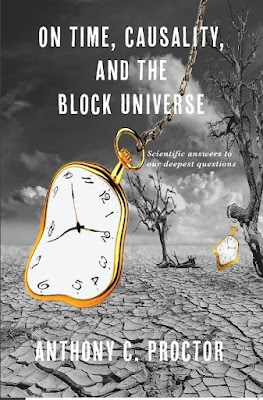
Readers of my blog may have wondered why it has published fewer research articles of late. The main reason is one of time. Apart from having to transfer my STEMMA website away from Google Sites, and produce a major new version of SVG Family-Tree Generator that has been reconstructed from the ground up, I have also been writing a book. No, it's not a genealogical one.


It's about physics and metaphysics, and called On Time, Causality, and the Block Universe. Some parts might be a bit heavy-going if you're not a physicist or philosopher, but there are chapters covering consciousness, emotion, intelligence, free will, computers, and so on, in addition to relativity and quantum theory; basically something for everyone. If you're interested in an independent view on the nature of reality then further details — including ISBN number, table of contents, and links for availability — can be found on the accompanying website: https://parallax-view.com/.

The publication date was 15th February 2022, but it is listed online by several stores if anyone is intrigued (see links on the landing page of the website).


Tuesday, 25 January 2022

Crystal Balls


About the time of my previous post on Genealogical Software, I came across a forward-looking article by Dick Eastman that mentioned push-button genealogy: What I See in My Crystal Ball: The Future of Genealogy Research. After picking myself up off the floor and composing myself, I just had to comment on the fallacy of this.


In all fairness, these mentions were really talking about automated record matching, and the article acknowledges that the process is not quite there yet, especially not "for all ancestors". However, in this vision of the future, we would eventually be able "to push a button and see a filled-in pedigree chart within seconds". So what's wrong with this picture?

Well, it assumes that records are clear, unambiguous, and cover everyone. Of the two-dozen or so research articles that I have published, more than 75% involve difficult cases of establishing identities and relationships where those facts were either disguised, deliberately hidden, or simply not documented in the records. If someone changed their name, or tried to conceal the parentage of a birth, then the "reliable records" are not going to help, no matter how much the developers "fine-tune the algorithms".

At best, this push-button genealogy will generate a valuable set of hints, and we all know how unreliable such hints can be. But on the whole, wouldn't the list be mostly accurate, once the technology has matured more; wouldn't it only be a minority of cases that needed the heavy-lifting? Well, no, once you have an error then it propagates downwards through subsequent generations, and all would have to be unpicked if that error ever got detected. As they say: one bad apple can spoil the bunch.

Difficult identity cases need a wider perspective (basically the FAN principle), and a consideration of both context and non-written sources. If you ignore such things as ephemera or oral history, instead expecting direct answers to be found in the so-called reliable records, then you will fail at some point.

This all reminds me of the case that got me into genealogy, a case recounted on a very early episode of Mondays with Myrt. This was a promise to my mother that I would find her estranged five siblings. They were all taken away from the family home back in 1947, and then sent to various foster homes or officially adopted. My mother was the oldest at the time (9 years), and it had been so long that she could only just recall their names and ages.

My first plan was to hire a professional but they told me that it simply wasn't possible. You see, all the relevant records were destroyed within 25 years of the event, and so there were no records to go on. I didn't accept the impossibility of this endeavour because it was important to me, and to my mother. My mother's natural parents (who I found had divorced shortly after the event) had passed on well before I started, and so my research had to identify extended family (aunts, uncles, cousins) and actually talk to real people, much as a detective would do. I did consult records but they were not obvious ones, and only selected on the basis of cases made from such testimony. Most of those siblings had changed their name (two had even changed their given name as well as their surname), but the effort was successful: they were reunited on my mother's 70th birthday.

Maybe you can now understand why I take such developer-based claims with a large pinch of salt. Genealogical research needs real people, and its evolution is not helped by wild and misdirected claims about what software can do for them.