Showing posts with label Narrative. Show all posts

Friday, 21 January 2022

Genealogical Software

This post might ruffle a few feathers, but so be it. I want to take a tour of the different types of genealogical software, and consider what are the real differences and how do they affect different types of user? What even constitutes genealogical software, and how many different ways can it be put together?
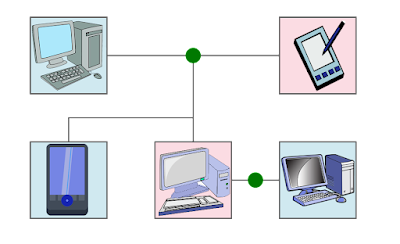

If you look at typical comparisons, such as Comparison of genealogy software and Comparison of web-based genealogy software, then you'll see that they tend to focus on very specific and rather small-scale features (e.g. single-parent families, or more than binary choice of sex). They also tend to focus on building trees (which is only a part of genealogy) and sometimes show the hallmarks of being compiled by developers rather than by product managers or journalists.

Unfortunately, traditional categorisations such as desktop versus web-based may capture the main players but unintentionally exclude the many niche players out there: products that often provide valuable additional features or functions to certain classes of user.

Users

So, to begin this exploration, what do we mean by users? You might be thinking experienced versus inexperienced, but no, I'm thinking about the people who compile and maintain genealogical data versus those who are simply interested and want to see something they can relate to.

Let's refer to these as genealogists and readers. This distinction is not a modern one, and would have been evident even in the days of printed genealogy.

Nowadays, genealogists will want to perform their own research and add data to some form of digital storage; usually a database. They will also want to share it with selected family, extended family, friends, or the general public, but those readers will have a different set of requirements. Typically, they will not want to install a special product or add-on, or pay some subscription, or even have to create a special account, and will expect access to work on whatever device they are using.

The views that these classes of user see should also be different. The genealogist will want one suited to maintenance, and which makes the manipulation of their data easier, while the reader will want a read-only presentational edition. This difference is analogous to the production of an article using a word-processor, and then someone looking at a read-only rendering of it without the menus and buttons used for modifying its content.

Software

Readers of this article will be aware of this term, but few would be able to give an accurate definition.

Traditionally, it has been the instructions that drive a computer, including all forms of hardware from mainframes down to embedded devices, but there are lots of variations on how this can happen; the most common being that the instructions are written in a high-level programming language that has to be converted into the binary machine code for the computer by another software component called a compiler (and yes, that compiler has to compile itself at some point). Assembly languages (rarer these days) are similar in having to be run through an assembler, but the associated language would be considered low-level, i.e. closer to the basic operations supported by the computer. However, some compilers defer to an assembler to complete the last step of their conversion. Some systems take the high-level language and compile it on-the-fly so that it looks like it is being executed directly. Some systems interpret a script language, and this may be done directly from its source code (very slow) or from a pseudo-machine code that has been generated on-the-fly. Finally, some languages are compiled into a pseudo-machine code that is then executed in a virtual machine, which is itself another software component.

In this traditional view, software is a set of procedural data, but there are many types of data, these days, that are declarative rather than procedural, including mark-up languages (e.g. HTML, XML, or SVG), cascading style sheets (CSS), and more. They are informally described as software since they may be essential to the executable components. More recently, the property of being Turing complete has been used to define a set of data-manipulation rules as a programming language.

Configurations

Most software configurations fall into two distinct camps: desktop and web-based, but there are some other variations to consider.

In a web-based product, there is a component that runs in your browser (which could be a page involving script code, or an add-on) and another component running on a remote web server. A wiki is a form of collaborative web-based product that manipulates multi-media data.

The desktop category invariably includes laptops, too, as the difference is largely irrelevant, but does not include hand-held devices, such as smart phones and PDAs. Here, we will use the term local to refer to software running wholly on any local device that you are in control of.

At the time of writing, the Wikipedia page Comparison of genealogy software calls this local configuration 'client', but that is not true as the term has been misappropriated from client-server: another configuration that is common in fields such as business intelligence but I'm not aware of any such product in the genealogy field. It involves a local component and a remote component, communicating via an Internet or other communications link, and sharing data or processing services. These services provided by the server component are application-level ones, and so do not typically include cloud storage or remote databases as they're too general-purpose.

Local products have another aspect to consider which is whether they can be run offline, with no external connection from your device. As they generally use local resources (files, databases, etc) — in contrast to the other two configurations — then it would be rare, if not a commercial disaster, to mandate such a connection.

Some functionality might be presented as a service, and almost invariably an online one, but we'll examine this in the section on presentation. We're using this term in the generic sense, here, rather than for 'web services', which we'll mention later.

Platforms

This category is the hardware and software environments supported for the product, i.e. the environments within which a product will run. In the two-component configurations (web-based and client-server), we will ignore the remote component as it is hidden from the user.

In principle, the operating system of a machine is separate from the hardware, but many are tied together in practice. For instance, iOS runs on iPhones, and Windows runs on Intel hardware — Microsoft did port Windows to other hardware (such as Alpha AXP) but it was commercially unsuccessful. As a result, we tend to think in terms of brands for Apple's MacOS and Microsoft's Windows. In either case, though, the operating-system version is significant, and this can be attested to by developers who have expended effort to ensure their product still works under the many changes within Windows 10.

Operating systems such as  Android (used in hand-held devices and small streaming units) and Linux are supported on a wider range of hardware.

If the product runs within a web browser then we have a similar set of issues with the software variations (e.g. Chrome, Firefox, Edge, or even the old Internet Explorer) and the associated web-browser versions.

Web-based products rarely require an installation (unless an add-on is involved) but even local products may get away with no installation being required. This can depend on the complexity of the product (e.g. being able to rely totally on system calls rather than on other software libraries or classes) and whether it includes its own support (products written in Java often include all their own classes).

An add-on (or 'add-in', or 'plug-in') is an adjunct component that extends the features or functions of a given product. We have already mentioned them in relation to web browsers but the concept may also be provided by genealogy software.

Licensing

Software is subject to copyright in many jurisdictions, but a licence establishes certain rights and restrictions for the usage of a software product. An end-user license agreement (EULA) is a contract that has to be accepted in order for the licence to be effective.

That licence may dictate how many users can run your copy of the product, whether it can be copied or redistributed, whether it can be re-sold, etc. Even when a product is free then a 'free software licence' may grant additional rights to reverse-engineer or modify it.

Where there is no physical copy of anything being installed (e.g. web-based products) then there might be a set of terms and conditions (or 'terms of use'), a similarly binding contract that covers more than the EULA (e.g. services).

Where usage of a product or services is not free then a software license usually involves a one-off cost (although that may not cover version upgrades — I'm thinking of precedents like Microsoft Windows or Office here), but a web-based product almost always requires a subscription or pay-per-access.

Royalties are slightly different and relate to the for-profit usage of some asset, such that the owner of that asset is paid a percentage of the gains from that usage, or possibly an amount per unit sold. Software developers can occasionally be paid in terms of royalties on future sales rather than for their development time. It would be rare to see this type of payment employed in the field of genealogy software but it could be applied where histories or trees are published in some way using specialised tools (see below).

Locales

There are two main aspects to a product supporting other locales: whether you can enter locale-specific data (e.g. I am English but have a German ancestor), and the user-interface locale (e.g. the product was created in the US but I am French). It is often equated with support for different languages, but support for a locale additionally includes things like dates, calendars, numbers, and more rarely support for the different structures of place names and personal names.

For the user interface (UI), simply claiming that text data is held in Unicode is insufficient to also claim the product UI can be made applicable to other locales (i.e. be localised). Even if text messages have been translated, there is a lot more to localisation than just the messages (see Software Concepts and Standards). For two-component configurations then product text should not (if well-designed) be coming directly from the server side. For instance, errors would be signalled by "throwing an exception", or indicated in a communications response, and an a corresponding client-side message reported to the end-user.

If a date (or time) is formatted as a readable text value (computers use ISO or some binary date formats internally) then it should be appropriate to the end-user's locale, and ideally to their preference too — locale libraries (NLS) usually have options for customisable full, long, medium, and short date formats.

When entering dates relevant to some other locale then the original textual representation may be unfamiliar (although preferably kept intact as evidence) but they would be converted to a standardised internal format ... unless they are not Gregorian dates. For foreign (non-Gregorian) or ancient calendars then there is no international standard for the digital storage of their dates, although GEDCOM has a go at supporting them.

One of the traps that a product can fall into when storing data values in a textual form (e.g. in a GEDCOM file, or even in a settings file) is storing them in the current locale (for which there can be two different ones in a two-component configuration) rather than a locale-independent format. The stored data should always be independent of the end-user's locale (see programming locale), and this is especially relevant where there are multiple genealogists updating the same data.

Evolution

If you're using an old product then you may be accepting that there will be no further revisions or fixes, but that does not mean that licensing is then irrelevant. I have tried to get a software licence for a deprecated and unsupported library, and was quoted such a ridiculous amount of money that I simply wrote my own version.

There are two aspects to the evolution of a product: active, meaning that new features may still be added in subsequent versions, and supported, meaning that problems will be addressed and ideally fixed. These are distinct, and a product may have reached the end of its active life but still be supported for a given period of time.

Data Manipulation

Let's consider the types of data that a genealogist can add, change, or leverage through their software product.

The data might be private to a single genealogist or to a small selected group of genealogists (as with a family project or a family history society), and local products fall into this category. Web-based products could involve either private or shared data. Back in What to Share, and How, the terminology of "unified trees" and "user-owned trees" were cited as being used in some blogs. They correspond to the private and shared terms used here, but we will not specifically consider "trees" at this point as they are merely a visualisation of some data.

Lineage is likely to be the thing most people will associate with genealogy — possibly because of the shared etymology with genetics — although products often get sucked into non-lineage complications. The mention of "single-parent families", at the start of this article, is one example: we all have two progenitive parents, even if they are unknown. Including adopted or fostered individuals is another example. In both of these cases, it's the concept of a family that causes the complication since lineage, families, and marriage are all separate concepts that do not necessarily coincide (see Happy Families).

With many products, and especially ones updating shared data, it is assumed that the people and relationships being represented are real (i.e. that they exist, or once did). But they might tentative or hypothetical if part of a research project, and they might even be fictitious if you're a writer. Depending on the nature of your research — for instance, a one-name or one-place study as opposed to a specific family — then the people and relationships might have to be disjoint, or include incidental people who were unrelated but still part of the history.

The way a product treats places can be crucial, depending on the nature of your research. In many products, a place is simply a string of jurisdictional names — a stance shared by the current GEDCOM specification. For example, "Americus, Indiana, US". However, places exist (or existed), have an identify that may need confirming, are part of a hierarchy (as with person lineage), may have multiple names, have a history, have documents associated with them, etc. The point being that they can be treated as historical subjects in a very similar way to people. More enlightened products can accommodate this depth of properties, and go beyond some specific place name.

Images, whether photographic or document scans, are probably supported by all products that maintain genealogical data. But they may be thumbnail images in a tree visualisation, an image gallery for a person/family (or for a place), or a portrait image accompanying biographical details.

It is not unusual these days to have a product help you with maintaining evidence and citing sources, but this wasn't always the case. It's definitely a move in the right direction, although the reality often falls short of an academic standard. On its own, a source reference, and particularly a simple hyperlink, does no more than identify a source of information. That information needs to support (or refute) a claim for it to be considered evidence of something, and so an indication of how the information is relevant to the claim is essential.

A product will usually involve a database to store all the data that it holds, but this is not true of all products. In fact, we'll explain in a moment that a database can be a limiting factor. The question of whether genealogical software actually needs a database at all was questioned back in Do Genealogists Really Need a Database?

Databases are good at storing discrete items of information and indexing them; what they're not good at is handling bulk text, but why is text important? Well, in addition to documenting real history, it's also needed for making proof arguments and general inferences, and for transcriptions; both of these latter forms requiring rich text (with formatting and mark-up) rather than plain text. An important comment on this perspective may be found at significant issue, and a brief discussion of different types of text may be found at Types of Text. This is not the same as the simple notes that we're led to believe is sufficient for our purposes. One reason for ignoring the requirement of real text — often implying that you just use a word-processor for that — is that bulk text is not only hard to store effectively but the semantics are also beyond the control of the software, and woe betide our software letting real genealogists be in control of their data. Linked to this limitation is the BS view that software can generate narrative from the discrete items of information in its database.

When a product uses data that is not of its own creation, or generates data for explicit consumption by other software, then we refer to it as import/export. It typically occurs with data files such as GEDCOM ones, but it can also involve an API (application programming interface). An API presents a programmatic view of the external data, and this may involve a communications link. That communication link can involve web services, which are more of a machine interface than an application interface.

Presentation

There are many different approaches to publishing genealogical information for consumption by readers, and this can involve the product used by the genealogist (via some explicit publishing operation, or by simply sharing the genealogist's view) or some separate more-specialised product.

There are some distinct forms that can be generated for presentation: reports, web pages, or physical objects. The actual content of these forms will be discussed below, but as an example, a report here could include biographical text, images, trees, or all of these.

A genealogist using a local product may be able to view an on-screen report, but for it to be shared then one option is to generate a printout of it. The content would obviously be static (with no interaction being possible) but it can be shared on a very selective basis. Such static reports could also be emailed to selected readers.

A more dynamic form would be web pages, i.e. *.html or *.htm files; *.svg files (employing Scalable Vector Graphics) can also be used, but there are security implications when SVG is used on its own (see What is SVG? Publishing Trees for Free). Web pages would be viewed in a web browser and so can interact with the reader to give a richer feel, or to present access to more parts of the information, but it is harder to control their privacy. Unless they are behind some gateway requiring authentication then they would usually be accessible to everyone. Requiring an add-on to be installed is another way to implement selective privacy but this would deter some readers. Another option is to email copies of the web pages since the recipients can then view them privately on their own computer, and with no loss of functionality. Web-based products might attempt to take shortcuts and simply present the same view to readers that the genealogist would have, or at least some slightly limited version of it. If this requires a subscription, or even an account creation, then it could deter readers. A recent summary  of how various familiar products generate online presentations may be found at 8 Places to Put Your Family Tree Online.

The production of physical objects requires specialised support, which would be seen as a service rather than a software component, and hence have service-related payments and conditions. Examples include plaques involving metal, wood, ceramics, or resin; scrolls and framed prints; and grave markers exhibiting QR codes to locate online information. Most services in this category would be online, or at least have an online option, but the days when we had to send in our image for printing on a memory stick, or even a roll of film, are not that far behind us.

Books, magazine/journal articles, and blog articles are an obvious form of publishing, but they are disjoint from our genealogical data. Although there are tools for creating tree visualisations to include in such publications, there is no easy route to generate the associated text, especially if your product uses a database. Even a wiki-based product is unlikely to offer enough formatting control to produce anything more than a simple printed article.

But what about the published content itself? The visualisation of relationships that we term family trees will be ubiquitous, but there are structural variations (see A Tree By Any Other Name Would Smell As Sweet) as well as different formats (e.g. fan charts). Bulk text in the form of historical/biographical narrative, or images, etc., as identified in the previous section, may also be involved.

While the published content is unlikely to be in a proprietary format requiring a specialised viewer (I'm certainly not aware of any examples), the act of publishing may require extra local software in the form of a standalone product accepting imported data, or an add-on to the genealogist's product, or some more complex arrangement (e.g. an add-on invoking a standalone product).

Possibly an untapped mode of visualisation is graphics that show geographical movements of people or families over time, or correlate the locations of people to help establish identities, or link evidence and useful information to source material (transcribed or scanned).

Conclusion

It should be clear, by now, that simple feature-by-feature comparisons for local and/or web-based products do not capture the full scope of existing products, nor do they acknowledge the wide range of possible functions and configurations. Focus tends to remain fixed on the software used by the genealogist as though that is a be-all and end-all to genealogical research, with much less effort and consideration being given to readers. As James Tanner remarked on his own blog, very recently: You can't take it with you!


Thursday, 17 December 2020

STEMMA Latest


If you are involved in the software representation of family history then you might justifiably ask what happened to STEMMA.


STEMMA is a private project to look at the digital representation of micro-history, including but not limited to family history. Work on it commenced in 2011, and the first specification appeared online in 2012. Primary goals were a distancing from the ubiquitous "build your family tree" notion of genealogy, avoidance of the use of trees as "wardrobes of hangers" upon which all and sundry can be placed, and a stemming the software trend of digesting everything to name-value pairs (usually described as "facts").

Its significance in relation to recent work by both FHISO and FamilySearch is low because it still treads a quite different path. It is not interested only in people, or in biological lineage, and its wider choice of historical subjects (including places, groups, and animals) has allowed software to leverage their similarities and orthogonality, such as hierarchical relationships and the handling of multiple names.

STEMMA does not use a database, which means that it is its own import/export format, and so is better-suited to long-term data storage because it does not require a separate backup format. More than this, though, a STEMMA file can be considered a "non-sequential document". Opening a STEMMA attachment will begin with a prescribed landing page, but the choice of where to navigate to from that page is a decision to be made by the reader. There is no sequential or hierarchical ordering of any pages, but there are many internal semantic links that can be followed based on some conscious rationale, and these might uncover lineage relationships (including trees), images, places, maps, or even narrative — all of which are integral parts of the data.

It is shocking that so few products accommodate narrative text, either for documenting the research process, authored works, story telling, memories, documenting biographical details, or for the transcription of old documents; and I do not know whether to laugh or cry when I hear software people still talking about programmatically generating text to lace together their recorded "facts". Software does not "understand" your research process, and should merely help you with its organisation and analysis. Human beings do not understand computer-speak and should not be presented with whatever it is that software people think is so convenient for their endeavours. Text is here to stay, and it should be an essential component of your data!

The latest public version of STEMMA is still V4.1, although a number of small changes in specification and direction have occurred internally. Little work has taken place on the informational sub-model that was to support a dynamic research process (see Our Days of Future Passed — Part I, and its follow-up parts II and III), but a spin-off of the associated experimentation was the SVG Family-Tree Generator (SVG-FTG) that is now a separate product, and soon to get a major upgrade. Work has focused, instead, on the conclusional sub-model, and one of the changes involves place hierarchies.

STEMMA recognises that places are not the same as point locations that can be given specific coordinates. Even if such a point is relaxed to be a closed polygon (say for describing the boundary of a town or village) or an open polygon (say for mapping a street, noting that European streets are rarely straight), then a place still has an identity that is independent of its location or its name(s). Boundaries and names may change over time, but a place is still a place. Originally, it was hoped that each place would have a unique parent place that was appropriate to the nature of the hierarchy. For instance, that an administrative place would have an administrative parent, or an ecclesiastical place would have an ecclesiastical parent, but the reality is too messy. The difference between geographical and administrative relationships can be vague, especially when including local administration in additional to national administration. As a result, each place is now deemed to have a single (but time-dependent) canonical parent, but the hierarchy is no longer of a specific type (i.e. it may vary depending upon the level in the hierarchy). The scheme still makes use of related entity linkages to connect items across hierarchies, such as registration districts (for civil registration of births) to ecclesiastical parishes (for baptisms), but the whole field remains challenging.

The only other project that I am aware of that is treading a similar path is the History Research Environment (HRE) that began in 2016. This has an incorporated not-for-profit UK company, History Research Environment Ltd, although work seems to be centred more in Australia. It comprises an open-source project to "create a free platform-independent application for the serious amateur or professional historical researcher", and was still under development at the time of writing. The main similarity with STEMMA is in the focus towards general history, and their tagline is "Towards a history of almost anything". It will be very interesting to see if they can muster commercial success in a field that might be considered specialist, and which high-profile genealogical advertising blatantly ignores.

The STEMMA project now has to share my efforts with the SVG-FTG (and other tools such as MetaProxy) as well as the publishing of my first book — not genealogy, but more on that another time.

The website for STEMMA has recently been moved from Google Sites to neocities.org. This was necessary because the old Google Sites (which was always a little clunky) is being replaced with a new one, and users have been given an ultimatum to convert, but the conversion tools are wholly inadequate for porting my old site across, despite the content being primarily textual. Google have also made a policy decision to provide no HTML editor and no way of importing the HTML of any pre-existing site. Good luck with that! It sounds like it could be another project ready to flounder.

So, the new link for the website is https://parallaxview.co/stemma. The URI http://stemma.parallaxview.co is, as before, reserved for STEMMA namespaces. The legacy URL of http://www.familyhistorydata.parallaxview.co should redirect if still used (once my DNS configurations does what I tell it).

Monday, 22 April 2019

Whitwick Historical Group


Following publication of my research article Further Travels of Walking Boots (and its predecessor, Boots Made For Walking) that mentioned the Leicestershire village of Whitwick, I contacted the Whitwick Historical Group (WHG). Their invaluable help allowed me to push back even further with this 18th Century saga.

My previous article had made a tentative connection between my lineage and a prominent Hammond family of both Whitwick and the city of Leicester. The connection rested on John Hammond (b. c1796 in Whitwick), John3, being the illegitimate son of William Hammond (a woolstapler) and Sarah Knight. While the article presented evidence to justify this connection, the strength of that evidence fell below the level required for a reliable conclusion.

Maureen Partridge (WHG) provided me with copies of Leicestershire bastardy bonds related to the name Hammond for both the 18th and 19th Centuries. Unfortunately, though, they didn't include any of the names or parishes of interest, suggesting that if my tentative connection was correct then paternity may have been disputed by William Hammond.

Memorial inscriptions for members of this prominent Hammond family exist in the Whitwick St. John the Baptist church, and the following details are from the notes of John Colledge (WHG) used in preparation for his original 1964 guide book to the church, and from his updated 1994 edition.

On the south wall of the sanctuary of the south isle is a burial tablet to Alderman John Hammond (John1) and his father-in-law George Moore:

Beneath lie the remains of George Moore, gent,
who departed this life May 6, 1724, aged near 30.
Also of Ann his wife :
she died the 2d of May, 1774, aged 74.
And also of Sarah their daughter, and wife of
John Hammond, one of the aldermen of the
Borough of Leicester, gent.
She died May 26, 1768, in the 49th year of her age.
Likewise of Henry-Moore Hammond, son
of the above John and Sarah Hammond.
He died April 27, 1778, aged 35 years.

In 1974, the base of the south isle altar had to be repaired, and underneath was found four gravestones: Thomas Thorpe (1800), John Hammond (1787), William Hammond (1812), and a damaged one from 1771. During this work, the entrance to the Hammond family vault was located, but it had been filled in as part of work during 1898.

The inscriptions on the two Hammond stones were as follows:

Beneath are deposited
the remains of
John Hammond
who departed this life
7th May 1787
aged 33 years.

Beneath
are deposited the
remains of
William Hammond
who departed this life
8th Nov. 1812
aged 49 years.


These are important because (a) they link the John2 and William whom were shown to be brothers in my previous article, and (b) they confirm my suggestion that William died in 1812, aged about 48 (1812-1764).

One of the men who filled in the vault in 1898 had told John Colledge that one of the four coffins was made of wood rather than lead, and had consequently perished, but it contained the body of a man with a long red beard.

Figure 1 – Plan of Whitwick St. John the Baptist church.[1]

I had previously identified the parents of John1 Hammond as a William and Catherine, and that John1 was baptised at Leicester St. Martin. This was confirmed by information provided by Maureen:

"William Hammond became a member of the council in 1702, a chamberlain 1706 and an alderman 1712. By his wife Catherine, who died in 1733, he had several children. Some of his descendants were living later in Whitwick, co. Leics. Ald. Hammond died 3 and was buried in St. Martin's churchyard 5 January 1741-2 aged sixty three, M.I. to him and his wife formerly to be seen there. Administration of his personal estate etc. was granted at Leics, 6 January 1741-2 to his son John Hammond".[2]

The only plausible identification I could find for Catherine was Katherine Blount of Little Dalby, 24 miles E. of Whitwick, who married a William "Hammon" on 16 Feb 1703.[3] This identification of Catherine works in terms of dates, and sheer number of children (the extract did say "several"). The following is a list of the children baptised to William and Catherine "Hamond". Note that the naming of one son as "Blunt" (an alternative spelling of Blount, with both being pronounced the same in Britain) fits with her maiden name and so confirms that these are the children of that pairing.

Given name
Birth
Baptism
Archive ref
Notes
Elizabeth
25 Nov 1704
4 Dec 1704
DE1564/1

Henry
28 Oct 1705
30 Oct 1705
DE1564/1, p.137

Mary
ditto
ditto
ditto

William
1 Dec 1706
11 Dec 1706
DE1564/1

Frances
31 Oct 1707
4 Nov 1707
DE1564/1

Blunt
2 Jun 1708
8 Oct 1708
DE1564/1, p.139

Samuel
6 Sep 1709
18 Sep 1709
DE1564/1
Buried 10 Oct 1711 aged 3
Isaac
22 Aug 1710
30 Aug 1710
DE1564/1, p.140

Harry
1 Dec 1712
5 Dec 1712
DE1564/1

John
21 Jan 1713
16 Feb 1713
DE1564/1
This child can be matched with John1
Samuel
22 Jan 1714
5 Feb 1714
DE1564/1, p.143

Table 1 – Children of William Hammond and Catherine Blount.[4]

The administration document of William's estate is transcribed as follows:

Know all men by these present that Wee John Hammond
of the Burr or Leicester Hosier & Joseph
Denshire of the same Brazier
are held and firmly bound unto Dr Richard Grey official
of the archdeaconry of Leicester
in the sum of one thousand pounds
of good and lawful Money of Great Britain to be
paid unto the said official or to his
certain attorney his Executors Administrators or Assigns to which
payment will and truly to be made Wee Oblige our selves and each
of us by himself for the whole our and
each of our Heirs Executors and Administrators
firmly by these presents sealed with our seals dated the sixth
day of February in the fifteen
year of the Reign of our sovereign Ld. George the 2d by the Grace
of God of Great Britain France and Ireland King Defender of
the Faith and so forth And in the year of our Lord one thousand
seven hundred and forty one [1741]

The Condition of this Obligation is such that if the above bounden John
Hammond and lawfull son and Administrator of all and singular the goods Chattells
and credits of William Hammond late of Leicester Deceased do
make or cause to be made a true and perfect Inventory of all and singular the Goods Chattells and
credits of the said deceased which have or shall come to the hands profession or knowledge of him
the said John or into the hands and profession of any
person or persons for him and the same so made do exhibit or cause to be exhibited into the Registry
of this court at or before the last day of
April next ensuing and the same goods chattells and credits and all other the goods
chattells and credits of the said Deceased at the time of his death which at any time after shall come
to the hands or profession of the said John or into the hands and
profession of any other person or persons for him do well and truly administer according to
law And further do make or cause to be made a true and just accompt of the said administra-
tion at or before the last day of February 1742 and all the rest and
residue of the said Goods Chattells and Credits which shall be found remaining upon the said
Administrators accompt the same being first Examined and allowed of by the Judge or Judges for
the time being of the said Court shall deliver and pay unto such person or persons respectively as the
said Judge or Judges by his or their decree or Sentence pursuant to the true intent and meaning of a
late Act or Parliament made in the two and twentieth and three and twentieth years of the reign
of our late Sovereign Lord King Charles the second (Intituled An Act for the better settling
of Intestate Estates) shall limit and appoint And if it shall hereafter appear that any last Will
and Testament was made by the said deceased and the Executor or Executors therein named
do exhibit the same into the said Court making request to have it allowed and approved accord-
ingly if the said Jn. Hammond above bounden being thereunto required do render
and deliver the said letters of Administration (approbation of such Testament first had
and made) in the said Court then this Obligation to be Void or Else to remain in full force and Virtue

Sealed and delivered being first                          John Hammond
duly Stamped in the presence of                           Jos Denshire

P. Stephens
Dep ty Reg.[5]

Notice that this identifies John1 as a "hosier" in 1741.

The list of freemen for the city of Leicester contained some important entries:

Page
Date
Content
230
1721 Oct 21
William Hammond, mayor
231
1721 Dec 7
William Hammond eld. s. of William Hammond esq., mayor of Leics.
270
1737 April 21
John Hammond  2nd s. of Mr. Wm. of Leics. furrier
491
1757 Sept. 16
Henry Moor Hammond, s. of John of Leics. p. to Henry Gutteridge of same, brazier from 25 March last
324
1763-4 Sept. 29
Henry Moor Hammond, eld. so. of Mr. John of Whitwick Co. Leics. furrier
523
1767
John Hammond s. of John of Whitwick Co. Leics. gent p. to John Coleman of same, tallow chandler and ropemaker from June 24 last £25
Table 2 – Freemen of the city 1196–1770.[6]

Page
Date
Content
29a
Jan 24 1789
William Hammond, 3s of the late Mr. Ald. John Hammond late of Whitwick, decd.
Table 3 – Freemen of the city 1770–1930.[7]
[a] This entry appeared in both the index of 'Parents and Masters' and the index of 'Freemen and Apprentices' within the volume.

These documents contain many instances of the abbreviation "p. of ..." and "p. to ...". In this context, the 'p' is short for "prentice", which is an archaic form of apprentice.

From this, we can see that William, his son John1, and his son Henry Moore, were all furriers. This is not in conflict with the previous identification of John1 as a hosier since a furrier is simply someone who sells, makes, dresses, or repairs fur garments. Also, we can see that John2 was a tallow chandler (maker of candles from animal fat) and rope maker.

The 1789 entry in Table 3 is important because it identifies the William who undertook the 7-year indenture of apprentice John Bonnett in Loughborough in 1796. Looking at the "Britain, Country Apprentices 1710-1808" database on Findmypast showed only the 1796 data already reported in the previous article, and no other William Hammond as either master or apprentice in Leicestershire.

Nearby Charnwood Forest was host to many mature deciduous trees, but by the end of the 18th Century most had been felled to supply wood and charcoal for the Industrial Revolution, leaving empty areas of pasture and moorland.[8] The land played host, though, to commercial rabbit warrens, and the rabbits would frequently escape their confines to compete with domestic stock for the limited grazing. In 1740, freeholders and commoners of Whitwick petitioned the Earl of Huntingdon to reduce his warren at Tin Meadow. In 1744, a further petition reminded the Earl that no action had been taken, and this resulted in a dispute between the petitioners and the warrener, a Mr. Hammond [almost certainly William, the father of John1].[9]

According to John, the Whitwick tallow chandlery factory was built just outside the village in about 1740, and had passed from John Coltman to John2 Hammond (son of John1, furrier) in 1767 upon the death of the former. The factory was on the outskirts because of the terrible smell associated with the process of making candles from animal fat.[10] It had occurred to both John and I that the rabbits may have supported both local industries: furriers and tallow chandlers, with the waste carcasses being processed after skinning. I did wonder whether rabbits would have enough fat on them, but then I came across the following useful information which confirmed that it was possible:

Fat from goats, sheep, llamas, alpacas, deer, moose, elk, caribou and other ungulates is hard and when rendered is called tallow. Fat from pigs, bear, and rabbit is soft fat, and when rendered is called lard. Fat from poultry such as duck, geese, and chickens is called “schmaltz” and is soft, almost liquid, at room temperature. The fat is rendered the same way regardless of the animal that it comes from. Softer fats render faster.[11]

These rabbit warrens are still visible as a series of rectangular mounds in an area known as (unsurprising) Warren Hills, just slightly to the east of the junction between Abbey Road and Warren Hills Road.

Figure 2 – Warren Hills, Whitwick.

Mound no. 8 on this map corresponds to the location 52°43'50.3"N 1°19'17.3"W on a modern aerial view of the area. The general area is raised with the peak at about 240m elevation, and it is scheduled to be a heritage monument (list entry number: 1018001). It is currently a small nature reserve with public footpaths.

Figure 3 – Warren Hills nature reserve, 2007. Photo credit © Mat Fascione (cc-by-sa/2.0)


Incidental finds in the records include the following 1730 Leicestershire reference: "Hammond Samuel, son of William, Leicester, Leicestershire, furrier, to George Langthorne, 30 Apr 1730 [dead], Curriers' Company".[12] Leather was softened or beaten by people called curriers, or gurriers. Note that tallow can also be used for leather conditioners, and to make soaps.

Also, the following reference to William Hammond as a furrier in a 1708 document relating to the mortgage of land in Frolesworth, 20 miles S. of Whitwick.

Title     MORTGAGE OF LAND IN FROLESWORTH
Description    Mortgage in sum of £265
i. Wm. Hammond of Leicester, furrier and Benj. Gutheridge of Leicester, hosier
ii. John Ayre of Leicester grazier
One messuage in Frowlesworth with 1½ acres of land in occ. of Anne Wikes, wid. and a close of land divided into parcels called Two Green Ways, The Pessell Slades and Pessell Leys containing 22 acres adjoining the road to Hinckley formerly in the occ. of Wm. Wikes of Leicester, yeo.
Consideration: £250 and 5s.
Recited: Mortgage 3 March 36 Chas.II [1684], Lease and Release, 31 January 5 Anne [1707]
Date    1708
Extent 1 item
Physical Description           parchment
Access Status           Open [13]


In conclusion, we've established a further ancestral generation of the Hammond family, and confirmed that the William Hammond teaching the trade of woolstapler to John Bonnett in Loughborough during 1796 was the brother of Alderman John Hammond (John2 in my previous article) of Whitwick, and hence the father cited in the marriage of John3 Hammond. None of the other source information encountered was in conflict with the material of my previous article.

What we have yet to confirm is that John3 was born to Sarah Knight.


My special thanks to Maureen Partridge and John Colledge of WHG for their help and effort in finding more source material and in providing me with much local information.


[1] Janet Cartlidge, Saint John the Baptist Church: Some of its history (Pukka, Nov 2015).
[2] "Roll of the Mayors and Lord Mayors of Leicester 1209 -1935", Leicestershire Record Office, p.299; extract provided by Maureen Partridge.
[3] Little Dalby Parish (Leicestershire), Marriage Register; “Leicestershire marriages”, database with images, Findmypast (www.findmypast.co.uk : accessed 15 Apr 2019), entry for William Hammon and Katherine Bloant [Blount], 16 Feb 1703; citing archive ref. DE2702/1; Record Office for Leicestershire, Leicester & Rutland.
[4] Leicester St Martin Parish (Leicestershire), Baptism Register; “Leicestershire baptisms”, database with images, Findmypast (www.findmypast.co.uk : accessed 15 Apr 2019), entry details as per tabluation; Record Office for Leicestershire, Leicester & Rutland.
[5] "Leicestershire Wills And Probate Records, 1500-1939”, database with images, Findmypast (www.findmypast.co.uk : accessed 15 Apr 2019), entry for William Hammond, 1741, gentl of Leicester; citing archive ref. 1741 (A-S); Record Office for Leicestershire, Leicester & Rutland.
[6] Freemen of the city of Leicester 11961770, vol.1, Henry Hartopp ed.(pub. for the Corporation of the city of Leicester by E. Backus, 1927-33); abstracted from the borough records.
[7] Freemen of the city of Leicester 17701930, vol.2.
[8] John Crocker, Charnwood Forest: A Changing Landscape (Sycamore press, 1981), p.78
[9] Ibid, p.82.
[10] John Colledge, "The City of Three Waters: The Tallow Chandling Business ... 1, 2", unpublished notes; hand-written copy provided by Maureen Partridge, 21 Feb 2019.
[11] "Easy Guide to render fat into tallow", Joybilee Farm (https://joybileefarm.com/easy-guide-to-render-fat-into-tallow/ : accessed 16 Apr 2019).
[12] "London Apprenticeship Abstracts, 1442-1850", database, Findmypast (www.findmypast.co.uk : accessed 16 Apr 2019), entry for William Hammond, 1730.
[13] "MORTGAGE OF LAND IN FROLESWORTH", item description from online archive catalogue, Record Office of Leicester, Leicestershire, and Rutland (http://record-office-catalogue.leics.gov.uk/CalmView/Record.aspx?src=CalmView.Catalog&id=DE3987 : accessed 16 Apr 2019).